Wire 09–14 · 6 hotels · last checked July 2026

Ice Hotels

Buildings made of frozen water and rebuilt every winter.

§ 01 — What this wire takes

Six buildings that do not outlive their own year. This is the international wire, from Swedish Lapland to a terrace above Gstaad, and every structure on it is cut or sprayed from ice and snow and then lost to the melt.

Off the wire: heated hotels with an ice bar in the basement, glass igloos, aurora cabins, and anything still standing in July. Good places, wrong format. The test is whether the building is frozen water and whether it is built again from nothing each season.

One practical arrangement is common to all six, so it is stated once here rather than six times: sleeping rooms hold below zero, guests use expedition sleeping bags, and heated buildings alongside carry the bathrooms, saunas and services. What the slips are actually about is method, setting and season.

§ 02 — The dispatches

Details change. Everything here is accurate to the best of our knowledge as at July 2026. All hotel names belong to their owners; we have no commercial relationship with any of them.

09

RIVER ICE / REBUILT YEARLY / LAPLAND

Icehotel
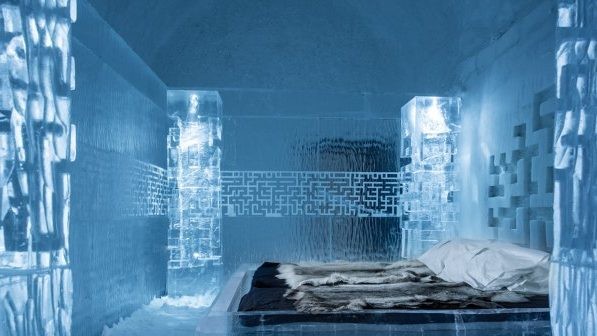
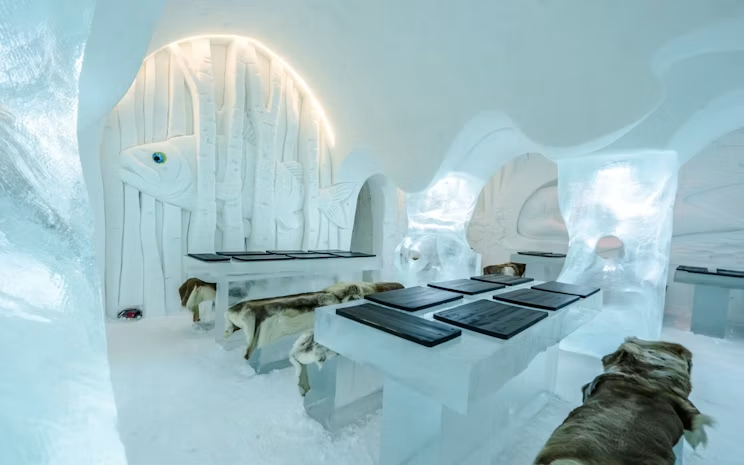
Carved ice walls in a suite at Jukkasjarvi, northern Sweden

The original ice hotel, at Jukkasjärvi in Swedish Lapland, running since 1989. It is built each winter from ice taken out of the Torne River, given a new design every season, and returned to the river when it melts in spring.

The method is the subject here. Ice is cut from the Torne in spring, stored through the summer, and used the following winter to build a structure that has never been the same twice. Artists are invited each season to design individual suites, so the interior is a set of separate commissions rather than a single scheme, and the whole thing is demolished by the weather within months.

The practical side is more prosaic than the photographs suggest. Cold rooms are for sleeping in insulated bags at around minus five degrees; warm accommodation, bathrooms and services sit in permanent buildings alongside. Most guests spend one night in ice and the rest in a heated room, which is the arrangement the operator recommends.

Within this wire, Jukkasjärvi is the origin point and the reason the rest exist. It also sits furthest into the Arctic Circle of the entries here, which affects daylight: in midwinter the sun barely clears the horizon. Kiruna is the nearest airport, roughly twenty kilometres away. There is a year-round hall kept frozen by solar power, but the seasonal building is the one that changes.

SETTING
Torne River, Swedish Lapland
BUILDING
Ice and snow, rebuilt each winter
SEASON
Winter season; a year-round hall also operates
ACCESS
Kiruna airport, about 20 kilometres away

Caveat — Deep Arctic winter, with very short daylight hours from December to January.
A note on this entry
10

SNOW VAULTS / REBUILT YEARLY / QUÉBEC

Hôtel de Glace

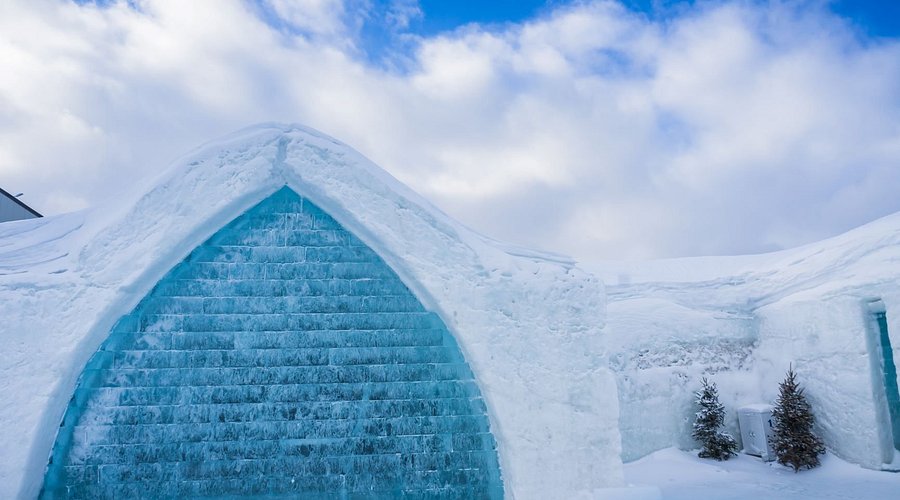
Vaulted snow corridor at the Quebec City ice hotel

North America's ice hotel, outside Québec City, running since 2001. It is redesigned and rebuilt from snow and ice every single year, so the plan, the vaults and the carved interiors are new each season rather than repeated.

Construction is a snow-first process. Snow is sprayed over formwork to make thick vaulted walls, the forms are removed, and ice is used for detail: columns, furniture, bar tops and carved reliefs. The vaults are what give the building its character, and because the plan changes annually the circulation changes with it.

Rooms range from plain sleeping chambers to themed suites, some with fireplaces that heat nothing in particular. Guests sleep on ice beds in insulated bags. As at every entry on this wire, heated buildings nearby carry the bathrooms, the changing rooms and the spa, and the operator briefs guests carefully before the first night.

Compared with Jukkasjärvi, the Québec building is more architectural and less gallery-like: the interest is in the vaulting and the plan rather than in a set of separately commissioned suites. It is also the most accessible entry on this wire. Québec City is a short drive away, and the site is often visited by day as well as slept in. The season is short, running through the coldest part of the northern winter, and it closes when the structure becomes unsafe.

SETTING
Near Québec City, Canada
BUILDING
Sprayed snow vaults with ice detail
SEASON
Winter season only; rebuilt annually
ACCESS
Short drive from Québec City

Caveat — A short winter season, and day visitors share the building with overnight guests.

A note on this entry
11

FJORD EDGE / SNOW ROOMS / FINNMARK

Kirkenes Snowhotel

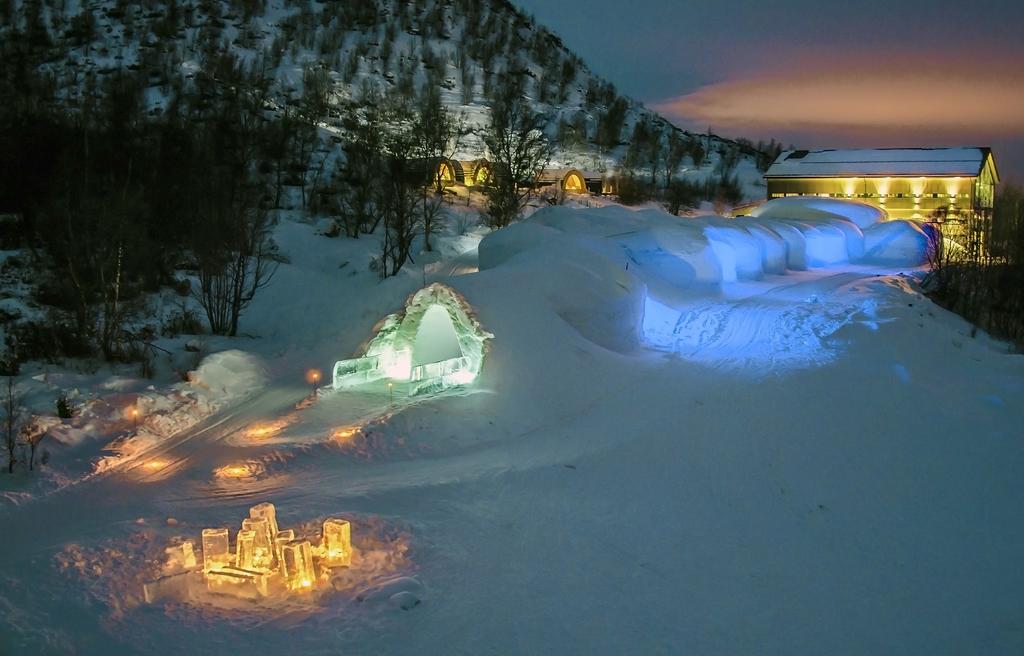
Snow rooms and timber service buildings beside a frozen fjord at Kirkenes

A snow hotel at Kirkenes in Finnmark, on the far north-eastern edge of Norway, operating since 2006. Snow rooms sit beside a frozen fjord, with heated cabins and service buildings arranged around them on the same site.

Kirkenes is close to the Russian border and a long way from anywhere else in Norway, which shapes the whole operation. The site is not a single building but a small settlement: carved snow rooms, timber cabins, a restaurant and a kennel, spread along the shore of the fjord. The snow structure is rebuilt each winter and carved with new work, though the plan is more consistent year to year than at Jukkasjärvi or Québec.

Sleeping is the same proposition as elsewhere on this wire. Rooms hold at a few degrees below zero, bedding is an insulated sleeping bag, and bathrooms are in the heated buildings. What differs is the setting: the fjord freezes, the surrounding country is low and open, and darkness is total for weeks in midwinter.

The site also runs working huskies, and dogs are part of the daily rhythm rather than an added extra. Guests who want silence should know that in advance. Kirkenes has an airport with domestic connections, and the transfer is short, but reaching Kirkenes at all takes most of a travelling day from southern Norway.

SETTING
Fjord shore, Finnmark, Norway
BUILDING
Carved snow rooms with heated cabins alongside
SEASON
Winter season; summer cabins also operate
ACCESS
Kirkenes airport, short transfer

Caveat — Far north-eastern Norway, so reaching Kirkenes takes most of a day from the south.

A note on this entry
12

FOREST SITE / SNOW ROOMS / LAPLAND

Arctic SnowHotel

Snow-walled sleeping room lit in blue at the Rovaniemi site

A snow hotel outside Rovaniemi in Finnish Lapland, with a season that runs roughly from the middle of December to the end of March. Snow rooms, a snow restaurant and heated glass cabins share one forest site near the Arctic Circle.

The site is inland and wooded, which distinguishes it from the fjord and river settings elsewhere on this wire. Snow rooms are carved with relief work along the walls and lit from within the ice, and a snow restaurant and chapel sit under the same roofline. Heated glass-roofed cabins occupy a separate part of the site, which lets guests split a stay between the two without moving.

The published season is unusually specific for this format, running from about 15 December to 31 March. Outside those dates the snow structure does not exist. That is worth saying plainly, because photographs of these buildings circulate all year and the buildings themselves do not.

Sleeping arrangements follow the pattern: sub-zero rooms, insulated bags, sauna and bathrooms in the heated buildings, and a briefing beforehand. Rovaniemi is the practical base, with an airport and direct trains from Helsinki, which makes this the easiest Nordic entry on the wire to reach. The town sits on the Arctic Circle itself, so the site is close to a working city rather than an hour out in empty country. The forest setting also means less open horizon than at Kirkenes, and correspondingly less exposure to wind, though it costs the guest the wide sky that the fjord and floodplain sites deliver for nothing.

SETTING
Forest site near Rovaniemi, Finland
BUILDING
Carved snow rooms; heated glass cabins alongside
SEASON
Roughly 15 December to 31 March
ACCESS
Rovaniemi airport and rail; short transfer

Caveat — The snow building exists only within its winter season and is removed for the rest of the year.

A note on this entry
13

ALPINE / 2000 METRES / SNOW DOMES

Iglu-Dorf

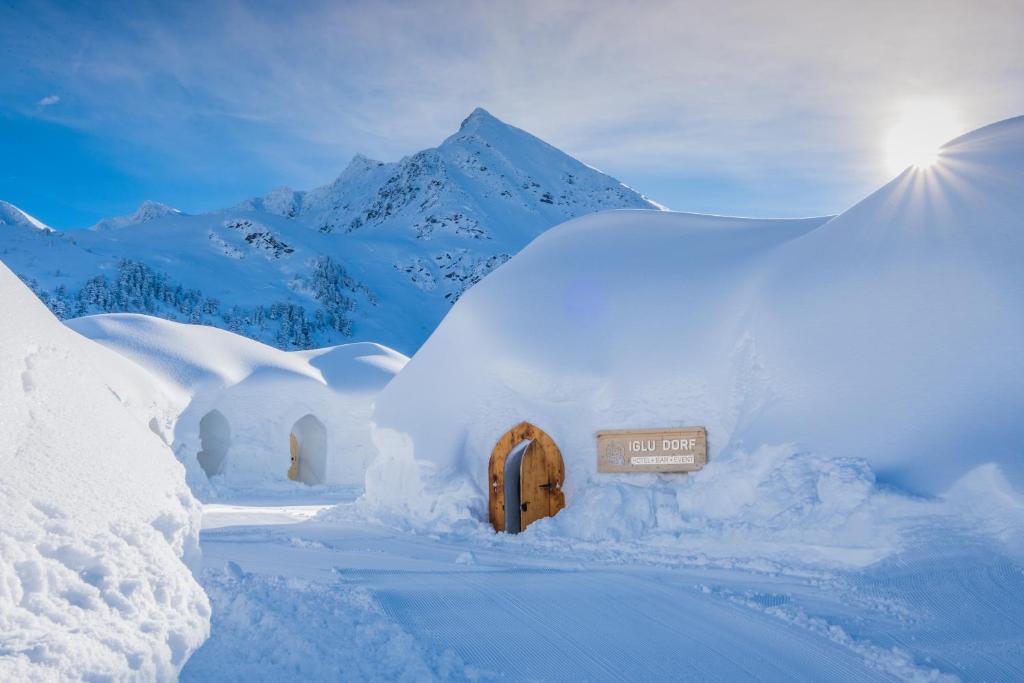
Linked snow domes on an alpine terrace above Gstaad

A snow village above Gstaad in the Bernese Oberland, built at roughly two thousand metres and reconstructed every winter. The accommodation is a set of linked snow domes on an alpine terrace, reached from the ski area rather than from a road.

Altitude is the difference here. Where the Nordic entries on this wire sit at low elevation in high latitudes, this one sits high up in the Alps, which means the cold is thinner, the sun is fierce during the day, and the site is accessible by lift and on foot rather than by car. Domes are built from compacted snow each season and connected by short tunnels, with carved interiors that change year to year.

Sleeping is the standard arrangement for the format: sub-zero rooms, expedition sleeping bags, and warm facilities in a nearby building. Evening meals lean towards fondue, which is a regional habit rather than a novelty, and the site runs a small bar cut from snow.

The Swiss entry is the most social of the six on this wire. Because it sits within a working ski area, the village is busy in daylight and quiet only after the lifts stop. Guests carry their own overnight kit up, and the operator is direct about what to bring. The season depends on snow cover, and the whole village is dismantled by the spring melt.

SETTING
Alpine terrace above Gstaad, Switzerland
BUILDING
Linked compacted-snow domes at about 2,000 metres
SEASON
Winter season; depends on snow cover
ACCESS
By lift and on foot from the ski area

Caveat — High altitude and no road access; overnight kit is carried up to the site.

A note on this entry
14

SNOW HALLS / REDESIGNED YEARLY / LAPLAND

SnowVillage

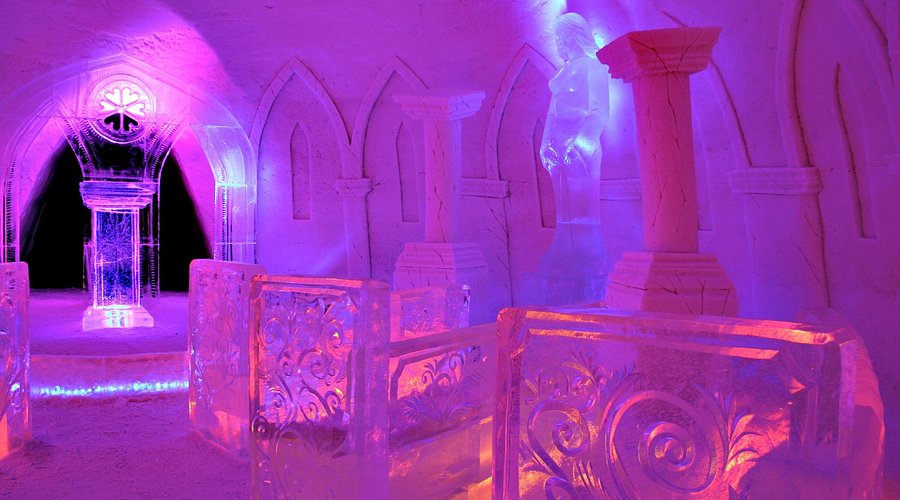
Sculpted snow hall interior at the Kittila site in Lapland

A snow village at Kittilä in Finnish Lapland that changes its form, size and theme every year. It is closer to a set of sculpted halls than to a hotel plan, with sleeping rooms, a bar and a restaurant cut into the same structure.

The annual redesign is the defining fact. The village is not simply rebuilt to the same drawing; the footprint, the height and the decorative programme all change, and a theme is chosen for the season. That has produced years that read as galleries and years that read as film sets, which makes this the most variable entry on the wire.

Practically, it works like the others. Sleeping rooms hold below freezing, guests use expedition bags, and the heated buildings on site carry the bathrooms and the sauna. A snow restaurant and an ice bar occupy part of the structure, and the village takes day visitors alongside overnight guests.

Kittilä sits in western Lapland with its own airport, and the surrounding fell country is used for skiing through the same months. Levi, the nearby resort town, supplies most of the beds in the area, so the snow village tends to function as one night inside a longer stay rather than as a base for a week. The season is short, it ends with the melt, and none of the structure is preserved or stored for the following winter. Anyone deciding on the strength of a photograph should check which year it was taken in, because the building in it no longer exists.

SETTING
Kittilä, western Finnish Lapland
BUILDING
Sculpted snow halls, redesigned every year
SEASON
Short winter season; ends with the melt
ACCESS
Kittilä airport nearby; short transfer

Caveat — Short season and a design that changes annually, so no two winters are comparable.

A note on this entry

§ 03 — Elsewhere

Next along the desk

Canadian casino hotels, filed for architecture and rooms only.

Casino Hotels All eighteen dispatches